How Climbing Walls Help Schools & Colleges Boost Fitness And Confidence
In today’s digital age, schools and colleges face a growing challenge, keeping students physically active, mentally strong, and confident. With increasing screen time and decreasing outdoor activity, traditional sports alone are often not enough to engage every student. This is where climbing walls are emerging as a powerful and innovative solution for educational institutions.
Once considered a niche adventure activity, climbing walls are now being widely adopted in schools and colleges as a tool for improving fitness, confidence, and overall student development. Beyond physical strength, climbing encourages problem-solving, resilience, teamwork, and self-belief, skills that are essential for success both inside and outside the classroom.
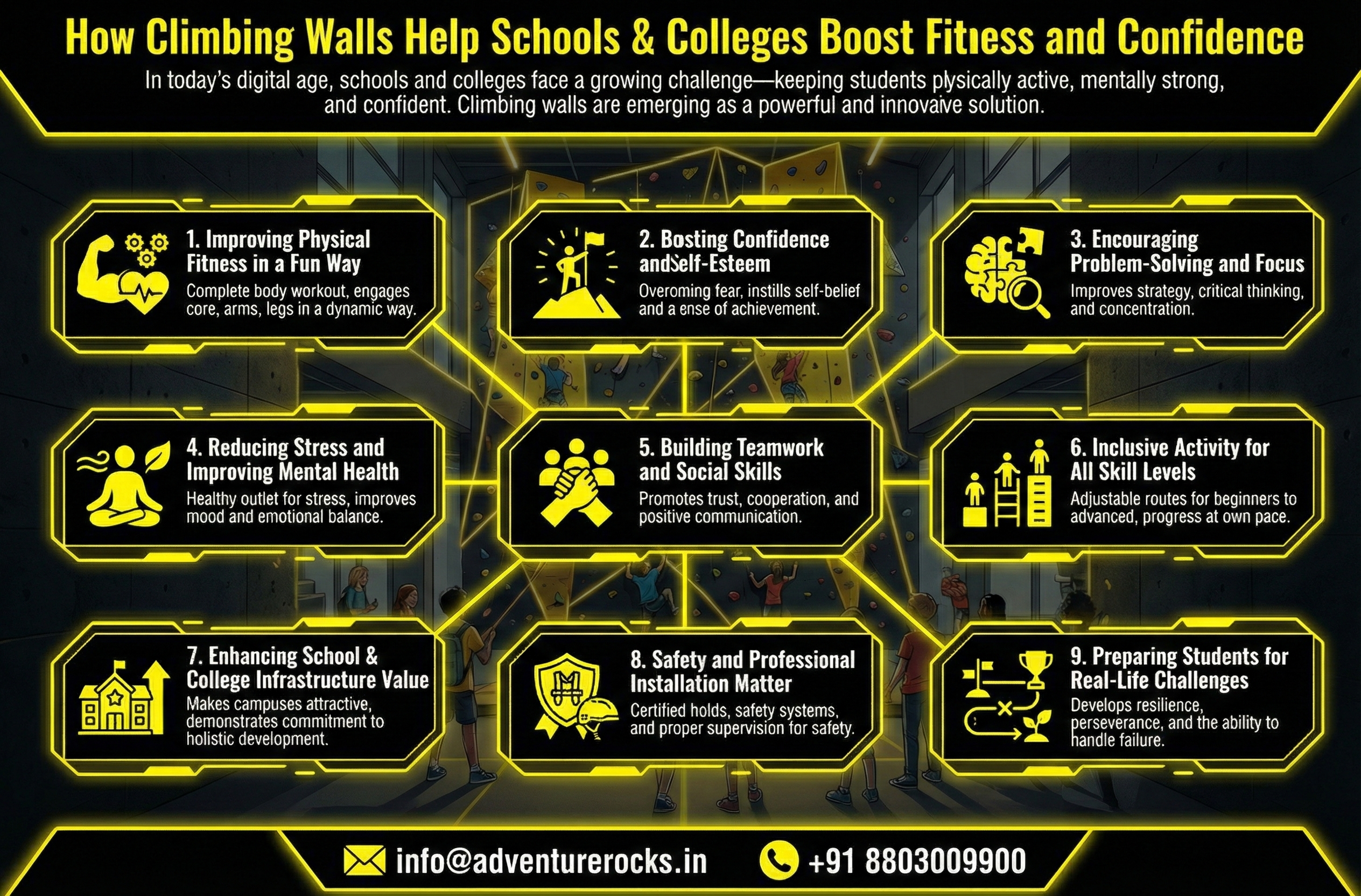
1. Improving Physical Fitness in a Fun Way
One of the biggest advantages of installing a climbing wall in schools or colleges is the complete physical workout it provides. Unlike routine exercises, climbing engages the entire body in a dynamic and enjoyable way.
Key fitness benefits include:
- Improved upper and lower body strength
- Better balance and coordination
- Enhanced flexibility and agility
- Increased cardiovascular endurance
Climbing walls activate core muscles, arms, legs, and grip strength simultaneously. For students who may not enjoy traditional sports, climbing offers a fun and inclusive alternative that motivates them to stay active without feeling pressured or bored.
2. Boosting Confidence and Self-Esteem
Confidence is a crucial part of student development, and climbing walls play a direct role in building it. Each climb presents a challenge, and every successful ascent—no matter how small—gives students a sense of achievement.
When students overcome fear, hesitation, or self-doubt while climbing, it creates a strong mental impact. Reaching the top of a wall instills:
- Self-belief
- Courage
- A sense of accomplishment
For many students, especially those who struggle academically or socially, a kids climbing wall or indoor climbing wall can become a space where they feel capable and confident.
3. Encouraging Problem-Solving and Focus
Climbing is not just about physical strength—it’s also about strategy. Students must think ahead, choose the right holds, and plan their moves carefully. This improves:
- Decision-making skills
- Concentration and focus
- Critical thinking
Unlike fast-paced games, climbing requires patience and presence of mind. These skills often transfer into academic performance, helping students stay focused in classrooms and exams.
4. Reducing Stress and Improving Mental Health
Academic pressure, exams, and competition can take a toll on students’ mental well-being. Physical activities like climbing help reduce stress by releasing endorphins, the body’s natural “feel-good” hormones.
Climbing walls provide:
- A healthy outlet for stress
- Improved mood and emotional balance
- Better mental resilience
Colleges especially are recognizing climbing walls as part of student wellness programs, helping young adults manage stress in a positive and constructive way.
5. Building Teamwork and Social Skills
Although climbing may seem like an individual activity, it strongly promotes teamwork and communication. Students often climb in groups, encourage one another, and share techniques.
Through climbing, students learn:
- Trust and cooperation
- Positive communication
- Leadership and peer support
In colleges, group climbing sessions foster bonding among students, helping introverted or new students feel more connected and confident within the campus environment.
6. Inclusive Activity for All Skill Levels
One of the biggest benefits of climbing walls in educational institutions is inclusivity. Walls can be designed with:
- Different difficulty levels
- Adjustable routes
- Age-appropriate heights
This means beginners and advanced climbers can use the same wall safely. Even students who are not athletic can participate and progress at their own pace, making climbing a confidence-building activity for all students, not just sports enthusiasts.
7. Enhancing School & College Infrastructure Value
Installing a climbing wall also enhances the institution’s infrastructure and reputation. Parents today look for schools and colleges that focus on holistic development, not just academics.
A well-designed climbing wall:
- Makes campuses more attractive
- Differentiates the institution from competitors
- Demonstrates commitment to fitness and innovation
Many schools and colleges use their climbing wall as a highlight during admissions and campus tours.
8. Safety and Professional Installation Matter
Modern climbing walls are designed with high safety standards. When installed by a professional climbing wall manufacturer, they include:
- Certified climbing holds
- Safety harness systems
- Crash mats or auto-belay systems
With proper supervision and safety guidelines, climbing walls are extremely safe and suitable for educational environments.
9. Preparing Students for Real-Life Challenges
Climbing teaches students an important life lesson: progress happens step by step. Falling and trying again is part of the journey.
This mindset helps students:
- Develop resilience
- Handle failure positively
- Build perseverance
These qualities are invaluable for real-world challenges, careers, and personal growth.
Conclusion
Climbing walls are far more than an adventure activity, they are a powerful educational tool. By improving physical fitness, boosting confidence, encouraging problem-solving, and supporting mental well-being, climbing walls help schools and colleges nurture stronger, healthier, and more confident students.
As educational institutions continue to prioritize holistic development, climbing walls for schools and colleges are becoming an essential part of modern campus design. Investing in climbing infrastructure today means investing in a fitter, more confident, and more capable generation tomorrow.